
Our approach
Postural Restoration, and what it means for your care.
You can strengthen a weak muscle, stretch a tight hip, follow an exercise program faithfully, and still be dealing with the same discomfort months later. For some people the missing information is in how the parts work together.
What care looks like
A more complete understanding.A more personal path forward.
Three stages, and an hour of one-on-one time at each of them. We begin with your history, test how the parts of your body work together, then build a plan around what we find. Most people get through the first two stages and start the third inside that first hour.
In Olly’s words
Postural Restoration at Inspire
A little over a minute on what the approach actually is, why the body’s asymmetry matters, and what that means for the hour you spend here.
All of our videosWhat Postural Restoration is
Postural Restoration is a physical therapy framework that looks at how the body’s natural asymmetries, breathing mechanics, muscle activity and habitual movement patterns interact. It was developed by the Postural Restoration Institute, founded in 2000 by the physical therapist Ron Hruska, and it puts particular weight on the relationship between the diaphragm, the rib cage and the pelvis, and on how people alternate weight and movement between their left and right sides.
Perfect symmetry is neither realistic nor necessary, and chasing it is a good way to spend a lot of appointments on something that was never the problem. What we are working toward is a body that is less patterned, one that can alternate between left and right, between working and relaxing. What a therapist looks for is the restriction or the coordination difficulty that is limiting what you can comfortably do.
Two patients make the point. One has plenty of strength in both legs but cannot shift weight smoothly onto the left. Another tests as flexible on every individual muscle and still barely rotates through the trunk while walking. Neither finding means anything on its own. Both become useful the moment they line up with what the person came in for.
Why natural asymmetry matters
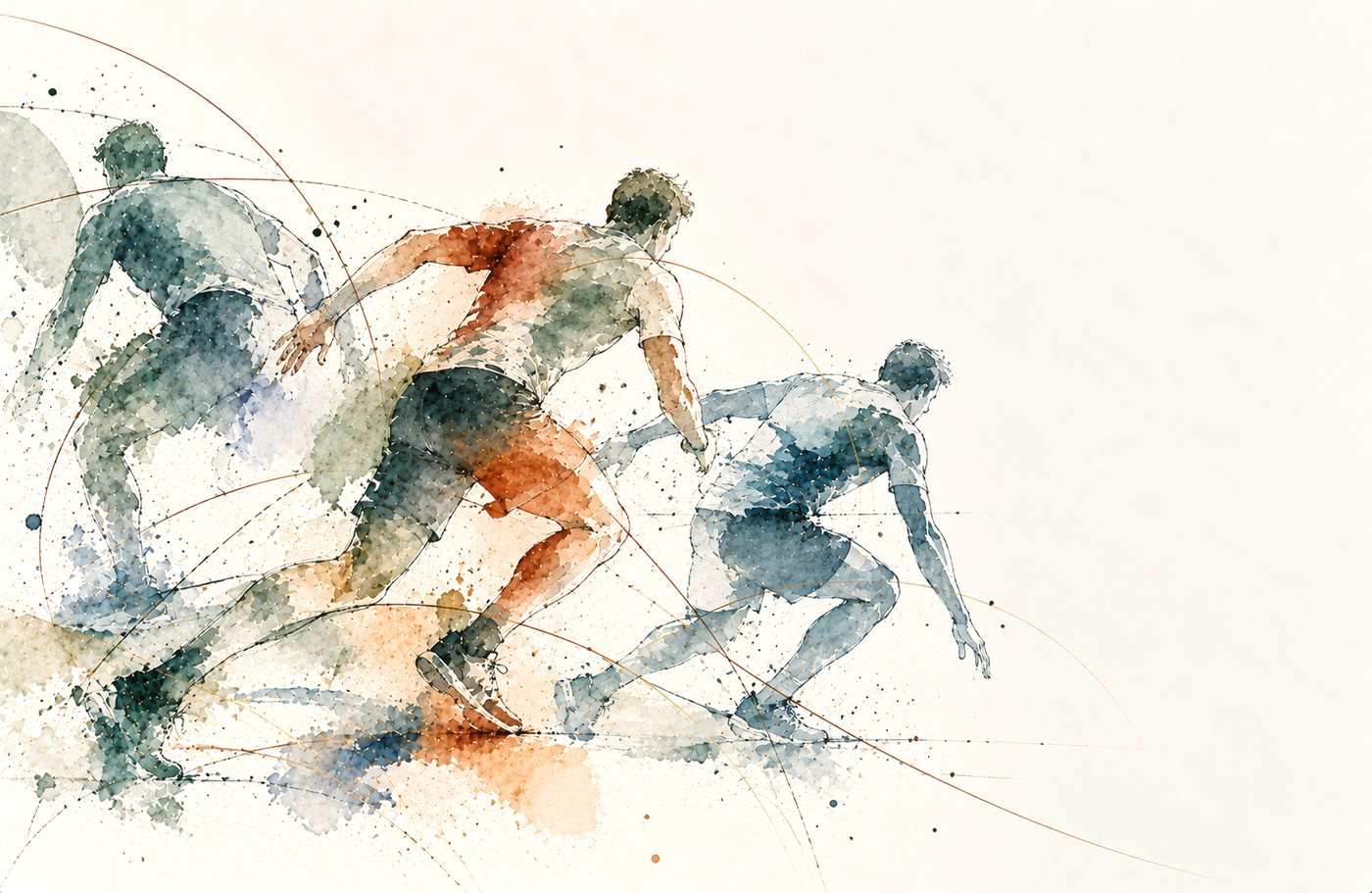
The two sides of the human body are not the same. The heart sits mostly to the left, the liver fills much of the right upper abdomen, and the two halves of the diaphragm have different anatomical relationships with the organs beneath them. On top of that, everybody develops preferred ways of standing, reaching and carrying.
None of that is a problem. Think of standing at a kitchen counter: most people drop onto one hip without noticing, and plenty of them will never feel a thing because of it. The question worth asking is not whether you do it. It is whether you can get out of it when you need to.
Can you take your weight onto the other leg? Can your pelvis and trunk turn both ways? Can you hold control while stepping, bending or reaching? A limitation starts to matter when it tracks with your symptoms, interferes with something you do, or stops you doing a task you need. Which is why a useful assessment looks at considerably more than the shape someone makes standing still.
Breathing and movement
Breathing is the most distinctive part of this work and the part that surprises people most. The muscles that move air also help control your trunk.
The diaphragm does more than breathe
The diaphragm is a dome of muscle between the chest and the abdomen. When it contracts it draws air into the lungs, and it also influences pressure inside the abdomen and works alongside the other trunk muscles during activity. Research has shown the diaphragm contributing to postural adjustments, which is the clearest explanation of why breathing and movement control turn out to be connected.
The rib cage matters just as much. How well it expands depends on the diaphragm, the muscles between the ribs, the abdominals and everything around them working in some kind of order.
Why the exercises look so undramatic
A Postural Restoration breathing exercise is usually done in a specific position. You might lie on your back with your feet supported, breathe out fully, then breathe in while holding a particular relationship between your pelvis and your rib cage. The position is the point: it changes what the muscles are being asked to do.
These are not a cure for back pain. They are one possible component of a plan, used when the assessment gives a reason to use them, and you should be told what that reason is.
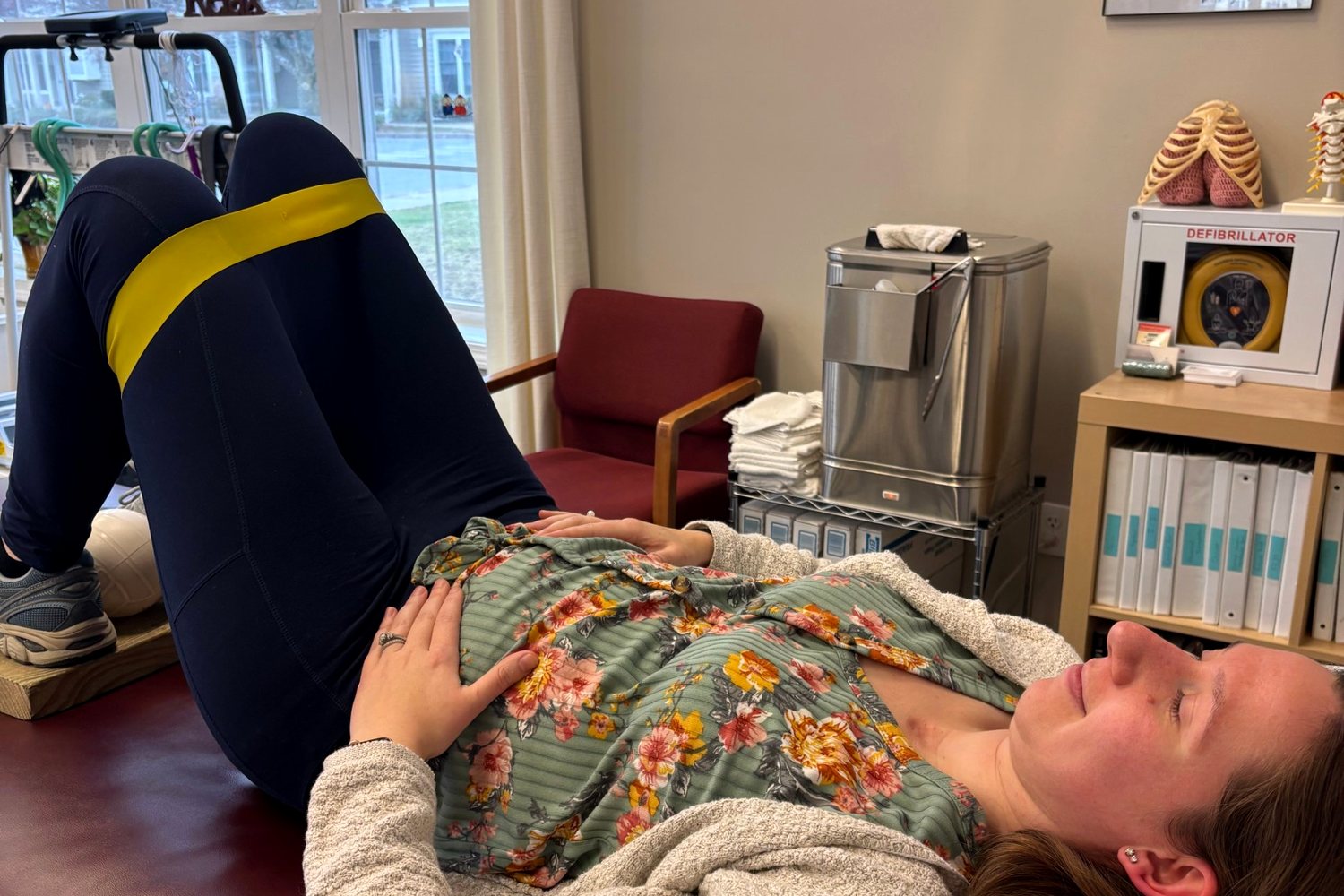
What matters as much as the exercise is who is doing it. You leave with a short set of your own to work on between visits, so the thing that makes you feel better is something you can do yourself. The aim is a patient who needs us less as they go on, rather than one who has to keep coming back to feel well.
What an assessment involves
It starts with a conversation, not a test. Your symptoms, your history, what has already been tried, what you actually want to get back to. A skier hoping to make the first week of the season and someone who wants to sit through a workday without shifting every ten minutes need different things from the same hour.
The physical examination usually covers some combination of the following, chosen to suit what you came in with.
- Movement and mobility. How your hips, spine, shoulders and other joints move, both on their own and during real tasks.
- Weight-bearing and balance. Standing on one leg, shifting weight, squatting, and other movements that show how you control your body.
- Breathing and rib cage movement. How the rib cage moves and how the trunk muscles coordinate, where that looks relevant.
- Strength and tolerance. What your muscles can produce and how long they can keep producing it.
- Response to a specific movement. A carefully chosen exercise, then a retest, to see whether anything meaningful changed.
No single test establishes that someone needs this approach. The findings get read together, against your history and your goals.
What treatment looks like
Two people with the same complaint can leave with entirely different programs, because the examination found different things and because they want different lives back. A plan might involve supported positions, controlled breathing, specific muscle activation, balance work, mobility work and progressive strengthening. Some of it uses a small ball, a band or a wall. Some of it is built straight into walking, lifting and squatting.
The progression is the part that matters. Early on the work is usually about finding a movement you can access comfortably. Later it is about doing that movement under real load. For a skier, rehabilitation eventually has to prepare the body for the forces and the endurance of an actual day on snow. For someone recovering from a back injury, it is more often about getting back the confidence to lift something awkward without thinking twice.
The exercises are tools, and the measure of whether they worked is what you can do afterwards.
How it differs from conventional care
Postural Restoration is a framework used inside physical therapy, not a separate profession. Plenty of good therapists already assess movement across the whole body, prescribe breathing work and look beyond the painful area. PRI differs in emphasis: its own model of predictable asymmetrical tendencies, the respiration and posture relationship, and a specific set of tests and exercises. That emphasis changes which tests a clinician reaches for and how exercises get prescribed.
What it is not is a claim that conventional therapy only treats symptoms while this finds the real cause. Good physical therapy anywhere should consider the whole person. The useful question is whether the strategies chosen actually address your limitations.
Where the hour comes in. A whole-body assessment takes time. Running one at every visit is only possible because every appointment at Inspire is a full hour of one-on-one time with your provider, rather than a shared session or time handed to an aide.
How we know it is working
The first visit produces numbers. How far your hips rotate in each direction and whether the two sides agree. How far the lower ribs move when you breathe, on each side. Whether you can take your weight onto one leg without the other side taking over. How the pelvis sits, how the trunk turns, and what happens to all of it when you do the thing that hurts.
Those get written down, and at the next visit they get taken again. A change in position shows up in them before it shows up in how you feel, which is useful on the days when progress is hard to sense from the inside.
It also keeps us honest. If the measurements have not moved, the plan is what changes rather than the effort you are putting in. Every technique has to earn its place by changing something we can see, and we would rather find that out in week two than in month three.
Who we tend to see
The people who get the most out of this approach are usually the ones with a complicated history. Recurring injuries. Symptoms that moved. A problem that two previous courses of treatment improved and did not resolve.
Two of our therapists hold the Postural Restoration Certified credential, which is unusual for a practice this size. Oliver Hall, who founded Inspire in 2007, was among the first twelve therapists in the United States to earn it, in December 2005, and has taught the material to physicians, rehabilitation professionals, universities and ski coaches since. Danielle Juckett earned hers in 2020.
Oliver raced for the British National Ski Team and at the University of Vermont, and the practice hosts an annual Ski Round Table for coaches and rehabilitation staff, which is the reason skiers tend to find their way here.
Where this applies
Each of these opens a detailed guide to that area, written and reviewed by Oliver Hall, PT, PRC.
FAQ
Common questions
about the approach.
If what you want to know isn’t here, call the clinic and ask. You’ll get a real answer from someone who treats people, rather than a booking script.
Book an appointmentNo. Postural Restoration looks at how breathing, muscle coordination, body position and movement interact with each other. Posture is part of the assessment, but the work is not about standing straighter or holding one ideal position.
The diaphragm is a breathing muscle that also helps control your trunk. Where your rib cage and pelvis sit changes what the muscles around them can do, so a breathing exercise in a specific position can change what a movement feels like.
They look simple. Whether they are worth your time depends on what the assessment found, and your therapist should be able to tell you why you are doing one.
No. Most of our patients are not. The assessment is built around what you need to do, which is as likely to be a full day on your feet, a garden in spring or stairs without thinking about them as it is a return to racing.
By the same measurements we took at the start. Hip rotation on each side, how far the lower ribs move when you breathe, whether you can load one leg without the other side compensating, and how the pelvis and trunk sit. They get repeated each visit.
Those numbers tend to move before the symptoms do, so they are the earliest honest signal either of us has. If they are not moving, we change the plan.
It depends on what is going on, how long it has been going on and what you are trying to get back to. Your provider can give you a realistic range after the first assessment, and will tell you when you no longer need to come in.
Inspire is at 47 Commerce Drive in Colchester, about ten minutes from downtown Burlington. Oliver Hall has held Postural Restoration certification since 2005.

Ready to move
Forward?Whether you’re dealing with a new injury or something that’s been holding you back for years, we’ll help you understand what’s going on and find a path forward.
Schedule an appointmentOne provider / One patient / One full hour
47 Commerce Drive, Colchester, Vermont 802-876-1000